Naming chat lock
WHATSAPP - CONTENT STRATEGY - NAMING - PRIVACY FEATURE 2023
What: Naming WhatsApp’s most innovative and marquee privacy feature of 2023, which directly competed with Telegram’s secret chats.
Goals: The name had to be clear, avoid nefarious connotations and stand on its own.
Challenge and scope
How might we… name a feature for hiding and protecting someone's most private chats in a way that feels protective and reassuring — not secretive, shady or like something to hide?
Earlier UXR (2022) had already flagged a real risk: when people were briefly asked about a feature called "hidden chats" many said they wouldn't use it because hiding something felt nefarious. That reaction shaped the entire naming challenge going forward. The name couldn't just be accurate, it had to actively avoid implying guilt or secrecy, while still clearly promising privacy and protection.
How it works
The scenario:
Imagine living in a full house (like the TV show) with grandparents, parents, children, uncles and aunts all sharing the same roof.
Intergenerational living is a common way of life in some of WhatsApp’s dominant markets like India. A significant portion of these global WhatsApp users share their device with household members. This makes it incredibly difficult to keep chats private from prying eyes and for people who share the same phone.
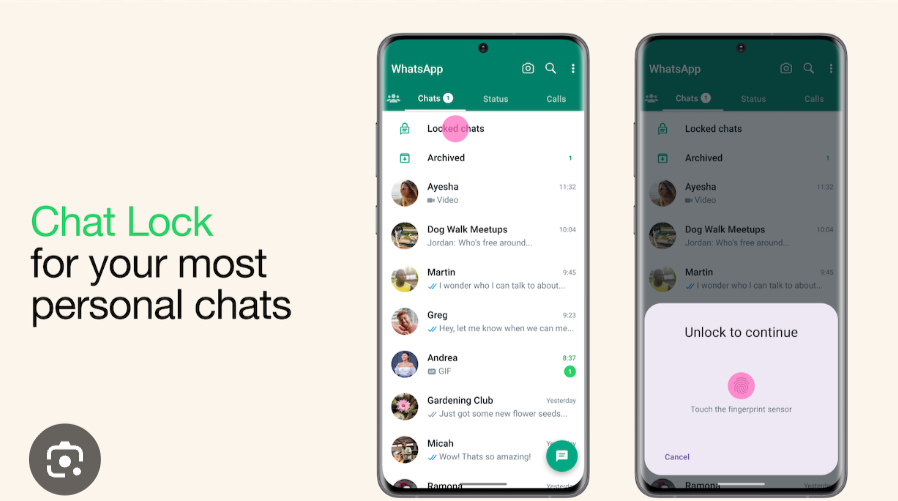
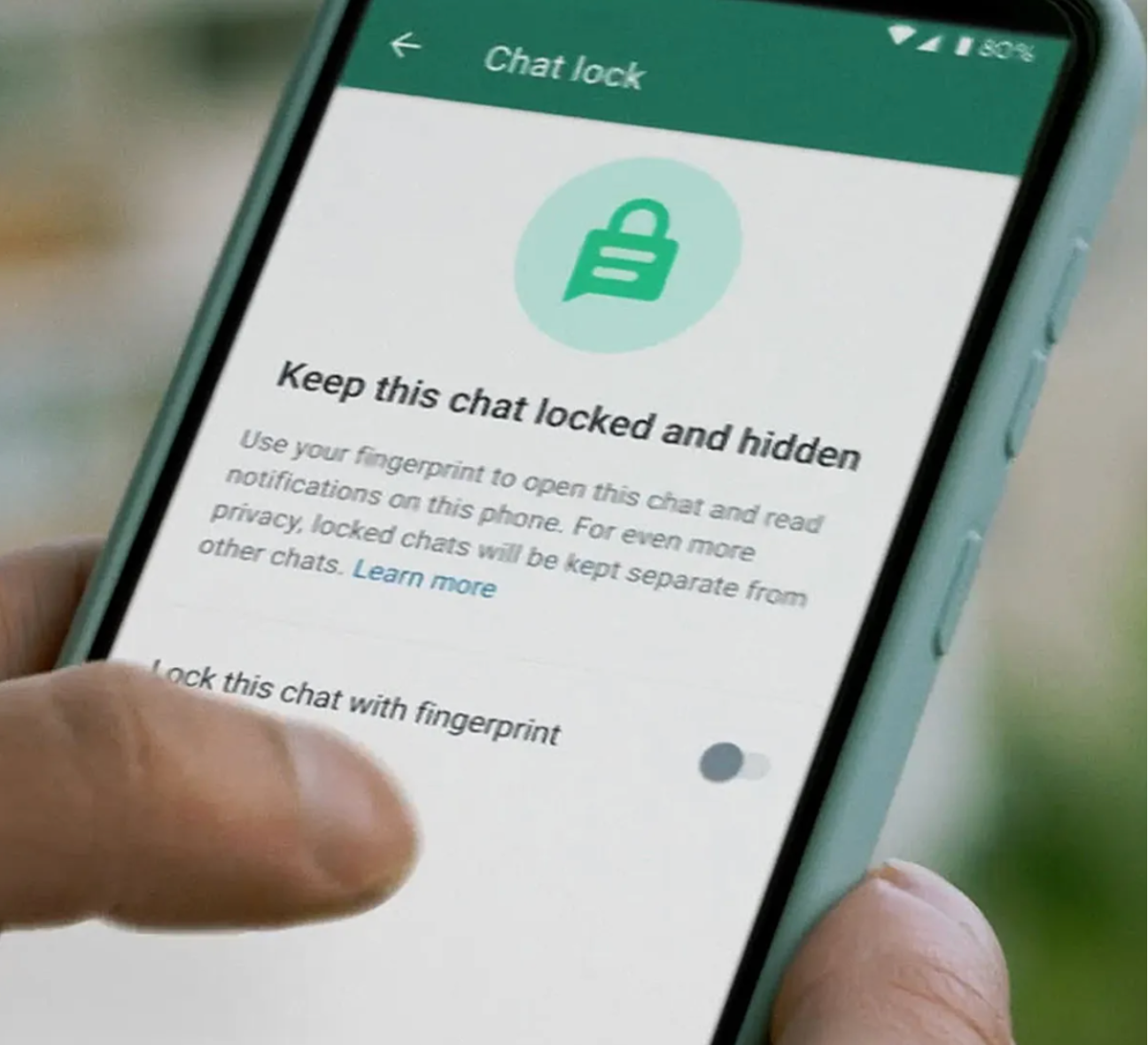
Chat lock lets you lock and hide an individual chat behind an extra layer of protection.
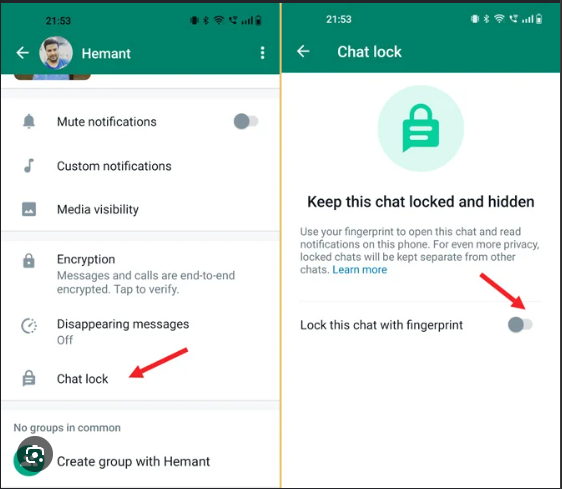
Locking — Turn the feature on for a specific chat from your chat's settings.
Hiding — Once locked, the chat is removed from the main list and tucked behind an extra tap (chat lock folder). You can only access it by pulling down on the WhatsApp logo.
Unlocking — Tap the same toggle in settings to turn the feature off. This returns the chat to the main chat list.
Strategy and process
Rather than settle on a name from crit alone, I ran the decision through four sequential filters — a broad namestorm, a UXR study, a marketing lens and two rounds of localization testing — each one narrowing the field and surfacing a different kind of risk.
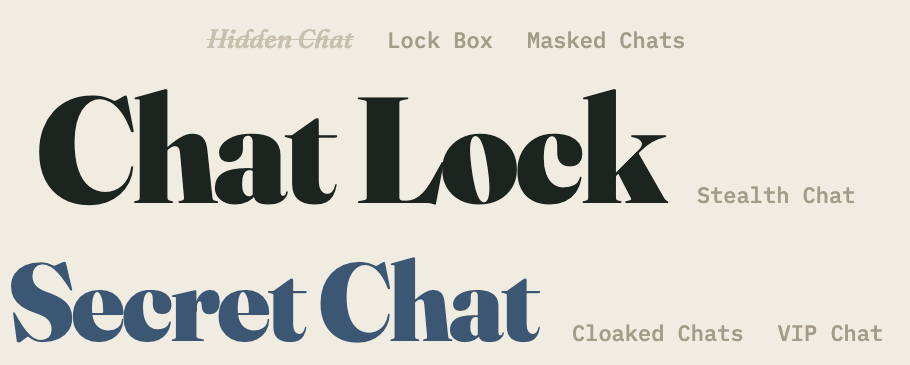
Namestorm — A working-group vote surfaced five real contenders: Chat lock, VIP chat, Stealth chat, Lock box, and Secret chat.
UXR Study — Tested the top 5 terms with users. Secret chat scored highest overall — but with its own flagged trade-offs.
Marketing POV — Marketing leaned toward Secret chat for its youth appeal, while also floating Masked chats and Cloaked chats.
2 Localization Checks — Ran both finalists across 30 languages — checking not just translatability, but whether the meaning actually landed.
Working principles
Privacy is not the same thing as secrecy — the name needed to promise protection without implying the person had something shameful to conceal.
The name should sit naturally alongside WhatsApp's existing feature family — screen lock, app lock — so it reads as familiar, not novel or alarming.
Easy to translate is not the same as easy to understand — every term needed to be checked for both, separately, in every target market.
The name should work with a simple, unambiguous icon — avoiding any confusion between a "lock" and a "hide/view" visual metaphor.
“When I turn on chat lock, I want to keep specific chats locked and hidden from people who I share my phone with so that I can have real conversations without worry.” Jobs to be done statement defining the need
Terms tested and vetted
Chat lock
Pros: sits well with existing WhatsApp features, similar to screen lock/app lock; implies both the quality of being locked away and clear functionality; easy to localize across all locales; implies password protection; works cleanly with a lock icon; preferred by the comms team. Cons: doesn't imply the "hiding" aspect on its own; very literal, which may limit room to iterate the feature later; icon choice can get confusing — a lock icon vs. a hide/view eye icon.
Secret chat
Pros: fun, youth-angled; quickly implies the hiding/secret aspect (UXR found this implied a functional benefit too); easy to localize across all locales; the marketing favorite; the UXR favorite among the five terms tested.
Cons: per UXR, also implies password protection; already a well-known Telegram feature name, which risks positioning WhatsApp as a follower; privacy doesn't equate to secrecy — "secret," like "hidden," risked being read as nefarious.
VIP chat
Pros: easy to localize
Cons: hard to explain the meaning in many languages; could be misread as "Veep" outside the US.
Hidden chat
Pros: Easy to localize
Cons: Earlier 2022 UXR found people said they wouldn't use ‘hidden chats’ since they "didn't have things to hide" — it felt nefarious. Hiding something doesn’t mean protection.
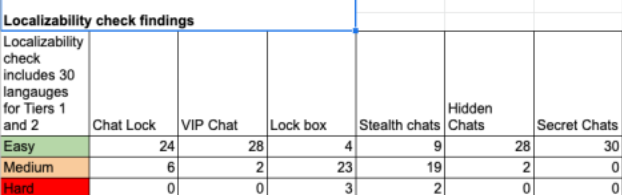
Namestorm results: chat lock, VIP chat, stealth chats, lock box, secret chat
I led a lively namestorm (brainstorming on names) that produced five real contenders. From there, each term was stress-tested through UXR, a marketing lens, and two separate rounds of localization, since a term that translates cleanly can still land the wrong way culturally.
Making a recommendation
1st localization check winner: Chat lock
VIP chat and Chat lock both translated easily — but easy to translate isn't the same as easy to understand. VIP chat wasn't favored by language managers, read as exclusivity rather than protection. Chat lock was easy to explain and read as similar to screen lock, though some language managers noted people might think their own chats were locked to them, too. Stealth chats scored in the middle — the secrecy/hidden sense risked stirring suspicion.
2nd localization check winner: Secret chat
Secret chat translated easily across all 30 languages tested. Language managers had mixed feelings about whether it sounded shady or carried a negative vibe, but most said it would work and preferred it because people would understand it quickly.
THE TENSION
UXR data and stakeholder judgment pointed in different directions. Secret chat won the quantitative UXR study and was the marketing team's favorite for its youth angle — but comms, marketing, and WhatsApp leads shared real reservations about the word "secret" itself: its nefarious connotation, and the risk of positioning WhatsApp as following Telegram, which already ships a feature by that name.
RECOMMENDATION: CHAT LOCK (with ‘secret chat’ as second rec)
Chat lock
Despite secret chat's edge in UXR, the team converged on Chat lock. It sat naturally alongside WhatsApp's existing lock-family features and it held up cleanly in the first localization check. The name didn’t position WhatsApp as ‘followers’ since Telegram had a ‘secret chats’ feature already.
The name “chat lock” positioned the feature as a stand-alone, innovative and privacy-forward feature that was a strong competitor to Telegram’s “secret chats”.